

Why does my child with ADHD become physically aggressive towards me?
Physical aggression is a form of severe tyrannical behavior, where a child uses coercion and intimidation to take control in an attempt to get what they want. It is a common behavior in children with ADHD. You did not cause your child's physical aggression, and you need a step-by-step plan that includes "pre-steps" to reduce and stop the behavior.
Your child's physical aggression is not out of their control. It reflects a lack of skills and structure, which you can learn to implement.
If you're ready to address your ADHD child's physical aggression, watch this short video.

In this short video, Ryan Wexelblatt, LCSW explains why the usual responses to a child's physical aggression, like staying calm, reasoning, gentle explanations, or getting your child to name feelings, often make the aggression worse, and what to do instead using the ADHD Dude "pre-steps."
What Ryan covers in this video:
-
Why staying calm, reasoning, and feelings-talk often increase physical aggression instead of reducing it
-
Why this isn't a reflection of your parenting; those tools just don't work for aggression
-
"Pre-steps": what you put in place before aggression happens, so your child knows what will change and why
-
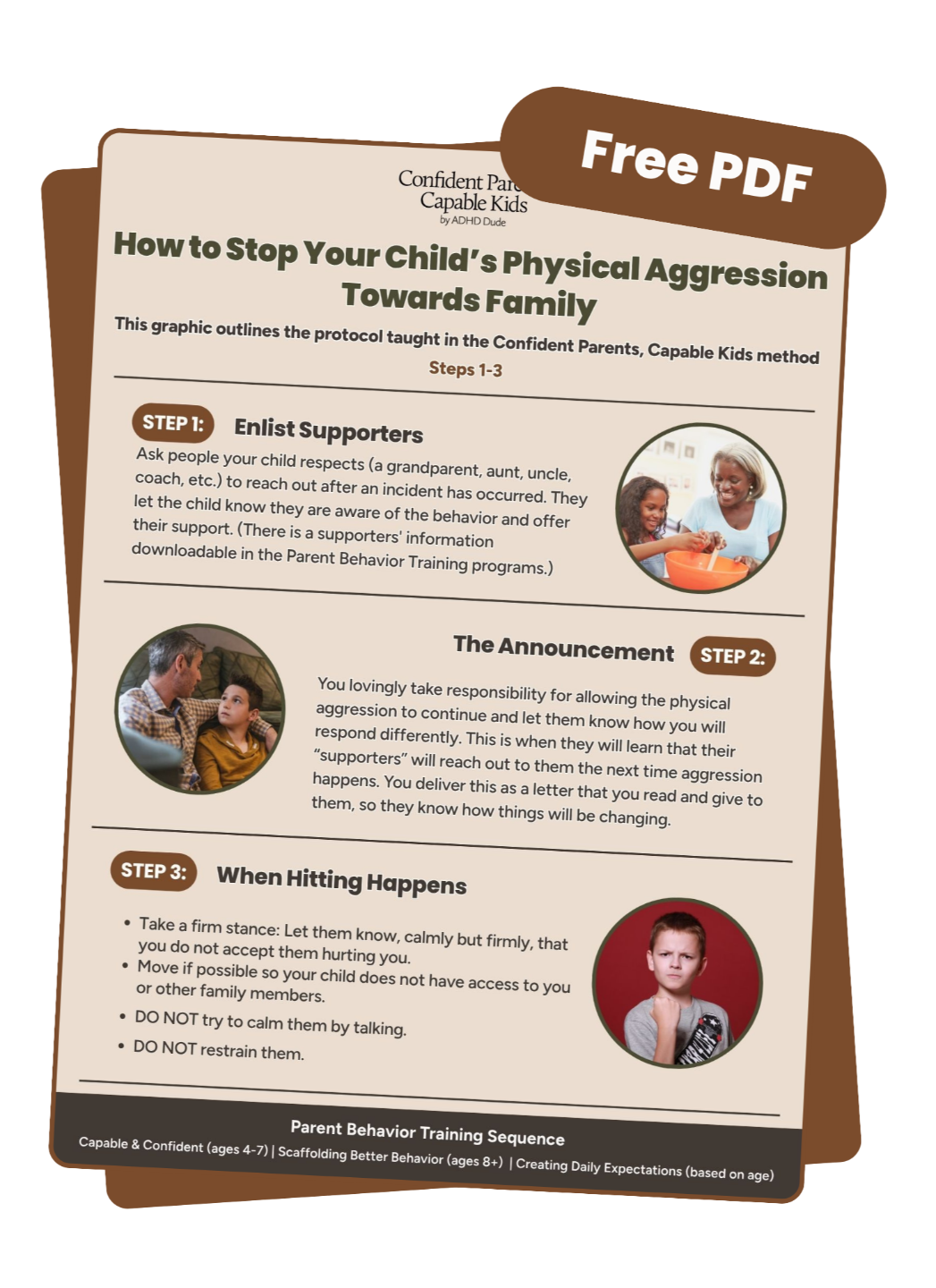
Enlisting supporters, people your child respects who reach out after an incident, including the exact words to use
-
Explaining ahead of time how you'll respond differently, including removing yourself and siblings so your child no longer has access to hit
-
The "cleanup" afterward: making amends through a kind action, which teaches repair and accountability and keeps the behavior from being a family secret
-
An honest note on when medication may need to be part of the picture for severe, frequent aggression
-
How this restores safety and predictability so no one lives in fear at home
When does physical aggression happen in children with ADHD?
Physical aggression tends to take hold when clear expectations and structure are missing, and it becomes more entrenched the longer it continues.
This pattern often shows up when:
There are no clear daily expectations in place for behavior or for how family members should be treated.
Parents are scared or unsure about how to step into their parental authority for the child's benefit.
The physical aggression has continued for a long time and has become normalized for the child.
The ADHD brain is concrete, so children with ADHD need structure, limits, and expectations to be successful.
Why don't popular parenting approaches stop physical aggression in children with ADHD?
-
Gentle parenting and "connection before correction"
-
Getting the child to verbalize feeling words in the moment
-
Punishments that don't lead to lasting behavior change
-
Talk therapy, play therapy, occupational therapy
Why they don't work for most kids with ADHD:
- There are no pre-steps in place. Pre-steps are what you set up before aggression happens, so your child knows how you will respond differently to their aggressive behavior.
- There are no clear expectations in place for your child to earn their "currency": the privileges they earn for meeting daily expectations.
- Therapy is not an evidence-based, recommended treatment for children with ADHD, which is why it's not included in the American Academy of Pediatrics ADHD treatment guidelines.
What should I do in the moment when my ADHD child is hitting me or being aggressive towards family members?
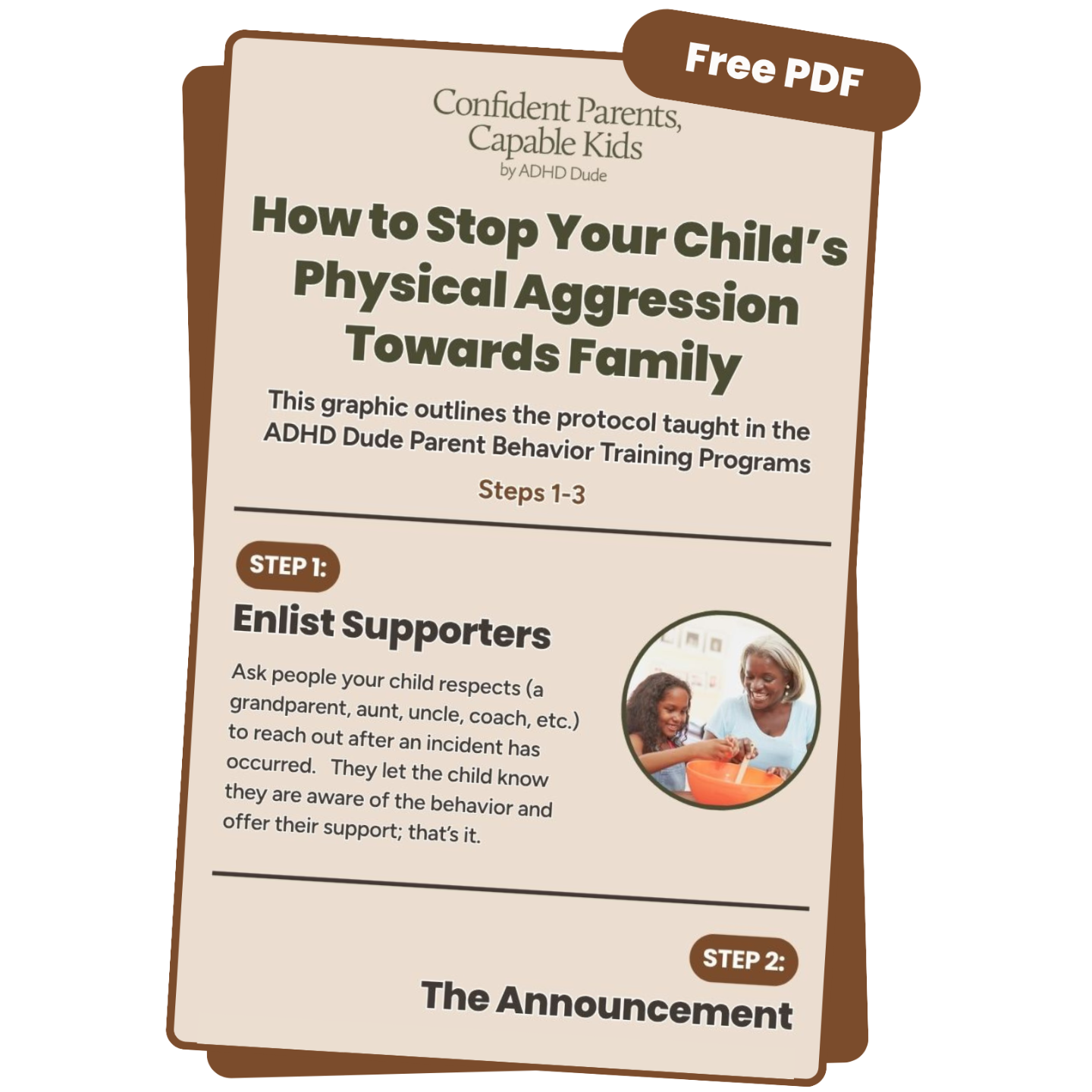
In the moment, state the boundary once ("You cannot hit me"), stop talking, and separate everyone to stay safe. Lasting change comes from the pre-steps below, the pieces you put in place before aggression happens.
Before aggression happens:
- Have daily expectations in place for earning their "currency".
- Enlist supporters (people your child respects who they would not want to know about their physical aggression).
- Let your child know how you will be responding differently to their physical aggression.
- Inform your child that their supporters will reach out after an incident to offer support.
When it's happening:
- Take a firm stance by saying, "You cannot hit me. That is not how we treat each other in our family."
- Stop talking after that; do not respond to your child's disrespectful language or verbal provocation.
- Separate yourself, other family members, and pets.
- DO NOT try to restrain your child unless you must protect other family members.

I’ve been where you are
Hi, I’m Ryan Wexelblatt, LCSW
I'm an ADHD specialist and licensed clinical social worker (LCSW), a former school social worker, and the dad who raised a son with ADHD and ODD."
20,000+
Families Supported
50+
Countries
Inside ADHD Dude Parent Behavior Training, you'll learn
1
How to stop giving attention to and reacting emotionally to unwanted behaviors.
2
Step into your parental authority so your child can feel emotionally safe knowing you are leading them.
3
How to reduce and stop parental accommodation, which leads to physical aggression.
4
Implement daily expectations for behavior, cooperation, and helping around the house so your child earns privileges.
5
So you can watch your child's behavior shift: less aggression, more cooperation, and a home that finally feels safe.
How do I start reducing my child's ADHD aggression?
Step 1: Start with the ADHD Dude Parent Behavior Training program for your child's age:
Capable & Confident (ages 4-7)
Scaffolding Better Behavior (ages 8-18)
Step 2: Continue with the Creating Daily Expectations course for your child's age.
Step 3: Attend twice-monthly Office Hours to have your questions answered live. You can ask as many as you need.