ADHD Parent Coaching vs. Parent Behavior Training: What the Research Shows
If you are searching for ADHD parent coaching, you have been working hard to find help for your child. You may have already worked with a therapist, a coach, or more than one. And you are still arguing at home, with little cooperation, over getting dressed, getting off screens, and doing simple tasks.
That is a common story among the families who come to ADHD Dude. They have been through several therapists or coaches, and they often liked the professional they worked with. What they say they did not get was anything actionable to improve their child's behavior, emotional regulation, or cooperation. Much of what they were taught was to negotiate more and to over-validate and over-empathize with their child's emotions. If that sounds like your family, you showed up and did the work, and the arguing and lack of cooperation at home stayed the same.
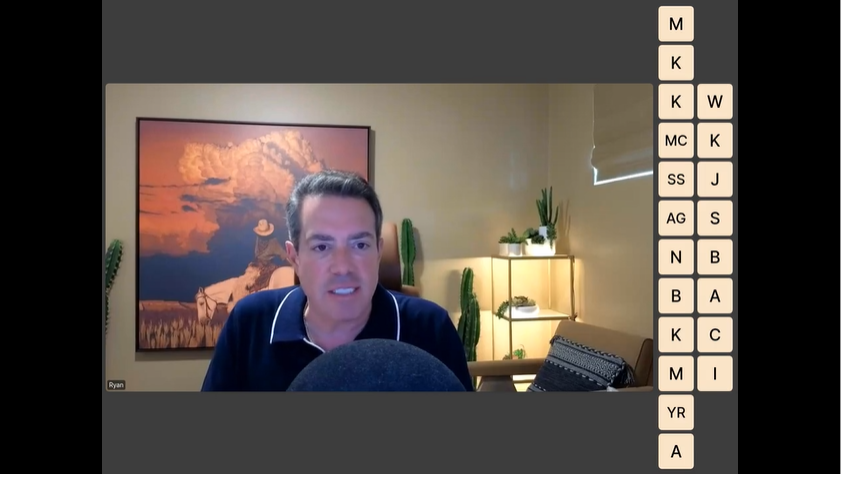
I know this firsthand. I am the father of a son with ADHD and ODD, and I am a licensed clinical social worker whose private practice works solely with ADHD and higher verbal autism.
That experience is why I want you to have the facts before you choose who to work with next. If you are wondering whether parent coaching is the answer, here is the direct answer. ADHD parent coaching is one-on-one work between a coach and the parent of a child with ADHD, usually in weekly virtual sessions (Sibley et al., 2026). The research on coaching parents of children with ADHD is small and early. The approach with the strongest evidence for children with ADHD is parent behavior training, which the American Academy of Pediatrics names as the first-line treatment for young children and recommends alongside medication for older children (Wolraich et al., 2019).
What ADHD parent coaching is
ADHD parent coaching takes the coaching format and applies it to the parent of a child with ADHD. In the United States, ADHD coaching is mostly delivered as weekly one-on-one virtual sessions that clients pay for out of pocket, and the number of people offering it grew sharply around the start of the COVID-19 pandemic. In a 2026 national survey of 481 ADHD coaches, 60.9% began practicing during or after the pandemic (Sibley et al., 2026).
There are excellent coaches. Most coaches in that survey have ADHD or suspect they do, and the survey's lead author says that shared experience can benefit clients (UW Medicine, 2026). What the title "coach" does not tell you is what training the person has. That is the part that decides whether your sessions give you strategies that change behavior at home.
What the research shows about parent coaching
Research on coaching parents of children with ADHD is limited. The few small studies are not discouraging, and the one that compared coaching with a self-help book found the two equally effective on parental competence. The authors of the national survey of ADHD coaches say randomized clinical trials are still needed to establish whether ADHD coaching is safe and effective (Shechtman et al., 2019; Hughes, 2017; Sibley et al., 2026).
Coaching is an unregulated, unlicensed field
Psychologists complete a bachelor's degree, a doctoral degree, an internship, and certification exams. There is no formal training or licensure to be an ADHD coach, and the lead author of the national survey notes the field has no formal standards, oversight, or professional liability insurance (UW Medicine, 2026).
These numbers describe the field. They say nothing about the choices you made. Here is what that survey of 481 ADHD coaches found (Sibley et al., 2026):
- 85.0% had no professional license.
- 89.3% reported no professional background in mental health.
- 90.5% operated without formal clinical supports.
- 62.5% completed an ADHD coach-led curriculum before entering the field.
Many coaches are well trained, and some are licensed clinicians. The difference is that nothing requires it. Some professionals who offer parent coaching also have no training in any evidence-based approach for ADHD.
If you have worked with someone like that, you did not choose wrong. The title gave you no way to tell a qualified person from an unqualified one before you paid.
There is also a cost to getting this wrong. Approaches that may feel compassionate but do not help your child build skills keep your child from learning how capable they are. And if you mostly look for advice online, you will run into misinformation, opinions stated as facts, and disinformation.
Two questions to ask anyone who offers to help with your child's ADHD
A professional who says "I've worked with lots of kids with ADHD" or "I've worked with neurodiverse families for years" describes their experience, not their training or qualifications. Experience is not the same as training. Ask these two questions instead:
- What training do you have?
- Do you follow any evidence-informed approaches, and if so, what?
A specific answer is easy to check. A vague answer is information too. Hold every program to this standard, including ours.
What the research supports, and how ADHD Dude helps
Parent behavior training has a much larger research base.
- It is the first-line recommendation. The American Academy of Pediatrics names parent training in behavior management as the first-line treatment for children with ADHD ages 4 to 6, to be tried before medication, and recommends it alongside medication for ages 6 to 12 (Wolraich et al., 2019).
- The benefits last. A 2023 meta-analysis pooled 27 randomized trials and found longer-term benefits for children's ADHD symptoms and behavior problems, and for positive parenting, parents' sense of competence, and the parent-child relationship (Doffer et al., 2023).
- It can be done on your own time. In a small randomized trial, a six-week self-help version of one parent training program led to clinically significant reductions in ADHD symptoms for 45% of the children in the program. It did not improve parents' mental health or parent-child interaction (Daley & O'Brien, 2013).
ADHD Dude answers both questions directly.
What training do you have? ADHD Dude was founded by Ryan Wexelblatt, LCSW. The experience behind it:
- A licensed clinical social worker whose private practice works solely with ADHD and higher verbal autism
- Extensive training in executive functioning, social skills, and evidence-informed behavior modification
- A former school social worker at special education schools, specializing in ADHD
- Multiple presentations at the International Conference on ADHD on improving behavior and emotional regulation
- Attends the medical ADHD conference to stay on top of the research and medication
- A father of a son with ADHD and ODD
- More than 20,000 families who have used the method
Do you follow any evidence-informed approaches? Yes. ADHD Dude Parent Behavior Training follows the evidence, including the executive function research and the American Academy of Pediatrics treatment recommendations. It combines high empathy with high expectations: you understand what is hard for your child, and you hold steady expectations so they get the practice to become capable. You can read the full explanation in What Is Parent Behavior Training.
This is what families tell us was missing before they came to ADHD Dude: actionable strategies. In the programs, you learn:
- The pre-steps that go in place before behavior happens, so the morning routine and the homework fight are set up to go differently before anyone is upset.
- How to respond in the moment without getting pulled into arguing, bargaining, or the negotiation loop.
- How to teach the missing skill, flexibility, tolerating frustration, recovering after no, in calm moments and not during the blowup.
Parents start with Capable & Confident (ages 4-7) or Scaffolding Better Behavior (ages 8-18), then Creating Daily Expectations. Everything is included with the ADHD Dude Membership. You do it on your own time, at an affordable price, and twice a month you can join live Office Hours and ask as many questions as you need to someone with extensive training and experience in ADHD.
What changes: you have concrete solutions for the most stressful behaviors in your home, and your child learns how capable they are.
Here is how that compares with 1:1 parent coaching:
| Feature | 1:1 parent coaching | ADHD Dude Membership |
|---|---|---|
| Training required to offer it | None. No formal training or licensure is required to be an ADHD coach (UW Medicine, 2026) | Founded by a licensed clinical social worker whose practice works solely with ADHD and higher verbal autism |
| Approach | Varies by coach | Parent behavior training, the first-line recommendation of the American Academy of Pediatrics |
| Research on the approach | Small early studies on coaching parents of children with ADHD | A 27-trial meta-analysis of parent behavior training found longer-term benefits (Doffer et al., 2023) |
| Format | Mostly weekly one-on-one virtual sessions (Sibley et al., 2026) | Self-paced, on your own time |
| Where your questions go | Your scheduled session | Twice-monthly live Office Hours, as many questions as you need |
| Payment | Mostly self-pay, with fees similar to psychotherapy (Sibley et al., 2026) | Affordable membership |
You do not need your child to agree, attend, or even know. Your child's behavior improves when you change how you respond to their behavior.
Frequently Asked Questions
Q: What is ADHD parent coaching?
A: ADHD parent coaching applies the coaching format, usually weekly one-on-one virtual sessions, to the parent of a child with ADHD. It is not a licensed or regulated service, and the training of the person offering it varies (Sibley et al., 2026; UW Medicine, 2026).
Q: Is ADHD parent coaching regulated or licensed?
A: No. There is no formal training or licensure to be an ADHD coach. In a national survey of 481 ADHD coaches, 85.0% had no professional license and 89.3% had no professional background in mental health (Sibley et al., 2026).
Q: Does ADHD parent coaching work?
A: The research is limited. The small studies of coaching parents of children with ADHD are not discouraging, but randomized trials are still needed to establish effectiveness (Shechtman et al., 2019; Sibley et al., 2026). Parent behavior training has a much larger research base and is the first-line recommendation of the American Academy of Pediatrics (Wolraich et al., 2019; Doffer et al., 2023).
Q: How is the ADHD Dude Membership different from 1:1 parent coaching?
A: The ADHD Dude Membership is parent behavior training you do on your own time at an affordable price, with twice-monthly live Office Hours where you can ask as many questions as you need to someone with extensive training and experience in ADHD.
Q: What should I ask before working with anyone on my child's ADHD?
A: Ask what training they have, and whether they follow any evidence-informed approaches and what those are. "I've worked with lots of kids with ADHD" does not tell you about their training or qualifications.
Q: How do I find a qualified ADHD parent coach?
A: There is no license to check, so ask what training they have and whether they follow any evidence-informed approaches, and if so, what. A specific answer is easy to verify.
Q: Do I need parent coaching or parent training for my child's ADHD?
A: The American Academy of Pediatrics names parent training in behavior management as the first-line treatment for young children with ADHD and recommends it alongside medication for older children (Wolraich et al., 2019). Research on parent coaching is limited (Sibley et al., 2026).
You should not have to guess who is qualified to help your child. ADHD Dude Parent Behavior Training gives you a step-by-step plan to improve behavior, emotional regulation, and cooperation at home. You can join the membership now, or watch the free webinar first.
References
Daley, D., & O'Brien, M. (2013). A small-scale randomized controlled trial of the self-help version of the New Forest Parent Training Programme for children with ADHD symptoms. European Child & Adolescent Psychiatry, 22(9), 543-552. Repository record
Doffer, D. P. A., Dekkers, T. J., Hornstra, R., van der Oord, S., Luman, M., Leijten, P., Hoekstra, P. J., van den Hoofdakker, B. J., & Groenman, A. P. (2023). Sustained improvements by behavioural parent training for children with attention-deficit/hyperactivity disorder: A meta-analytic review of longer-term child and parental outcomes. JCPP Advances, 3(3), e12196. https://doi.org/10.1002/jcv2.12196
Hughes, S. M. (2017). Coaching parents of children with ADHD: A Western Australian study [Master's thesis, Edith Cowan University]. https://ro.ecu.edu.au/theses/2031
Shechtman, Z., Baram, T., Barak, A., & Danino, M. (2019). Coaching vs. self-help for parents of children with ADHD: Outcomes and processes. Journal of Creativity in Mental Health, 14(2), 138-151. https://doi.org/10.1080/15401383.2019.1566040
Sibley, M. H., Graham, E. D., Holbrook, J. K., Dvorsky, M. R., Yeguez, C. E., Rosier, T., Coghill, D., Page, T. F., Fouche, R., & Demuth, J. (2026). Demographics, services, and practices in attention-deficit/hyperactivity disorder coaching in the US. JAMA Network Open, 9(1), e2552407. https://doi.org/10.1001/jamanetworkopen.2025.52407
UW Medicine. (2026, January 15). Researchers survey the ADHD coaching boom. UW Medicine Newsroom. https://newsroom.uw.edu/news-releases/researchers-survey-the-adhd-coaching-boom
Wolraich, M. L., Hagan, J. F., Allan, C., Chan, E., Davison, D., Earls, M., Evans, S. W., Flinn, S. K., Froehlich, T., Frost, J., Holbrook, J. R., Lehmann, C. U., Lessin, H. R., Okechukwu, K., Pierce, K. L., Winner, J. D., Zurhellen, W., & Subcommittee on Children and Adolescents With Attention-Deficit/Hyperactive Disorder. (2019). Clinical practice guideline for the diagnosis, evaluation, and treatment of attention-deficit/hyperactivity disorder in children and adolescents. Pediatrics, 144(4), e20192528. https://doi.org/10.1542/peds.2019-2528